How Anti-Coning Load Wheels Extend Forklift Lifespan
Industrial logistics operations face a persistent operational challenge: rapid tire degradation during tight cornering and high-load transport. To address the severe edge wear that shortens component lifespans in warehousing fleets, advanced engineering has yielded specialized Anti-Coning Sectional Load Wheels for Industrial Forklifts.
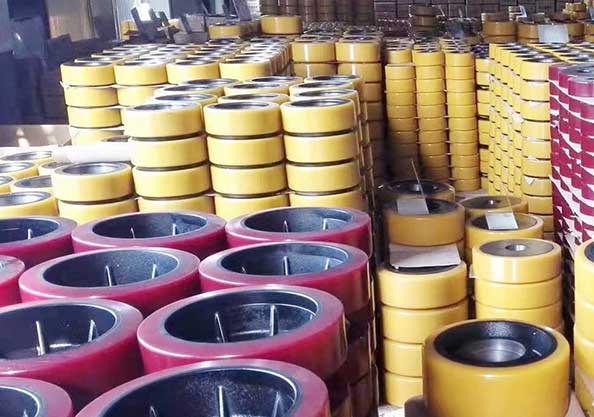
Addressing the Root Cause of Premature Wheel Wear
Standard solid load wheels deployed on reach trucks and heavy electric pallet jacks frequently suffer from "coning"—a phenomenon where friction and speed differentials during sharp turns erode the outer edges of the tire. Over time, this transforms the cylindrical profile into a conical shape, leading to steering instability and frequent, costly replacements.
The anti-coning sectional design utilizes a multi-segment polyurethane architecture. By dividing the wheel into independent, parallel rolling segments, the assembly accommodates differential rotational speeds when the vehicle executes turns. This mechanical adaptation minimizes lateral scrubbing forces, prevents surface tearing, and maintains an even contact patch across the running surface.
Performance Benefits in High-Intensity Warehousing
Engineered from high-performance polyurethane compounds, these sectional load wheels deliver key operational advantages for modern distribution centers:
Extended Service Life: Elimination of excessive edge wear significantly increases operating hours between replacements.
Reduced Rolling Resistance: Optimized multi-segment contact lowers energy consumption for electric forklift fleets.
Floor Protection: High-grade polyurethane formulations safeguard warehouse flooring against marking and gouging under maximum load capacities.
By targeting the mechanical friction points inherent in intensive material handling, anti-coning sectional load wheels provide a durable maintenance solution for fleet operators seeking to minimize downtime and reduce component lifecycle costs.